
Dedicated vs. Multi-Caliber Suppressor
Jimmy Harrell Sep 01, 2026
Dedicated Suppressor vs. Multi-Caliber Suppressor: Which Is Better for Your First Can?
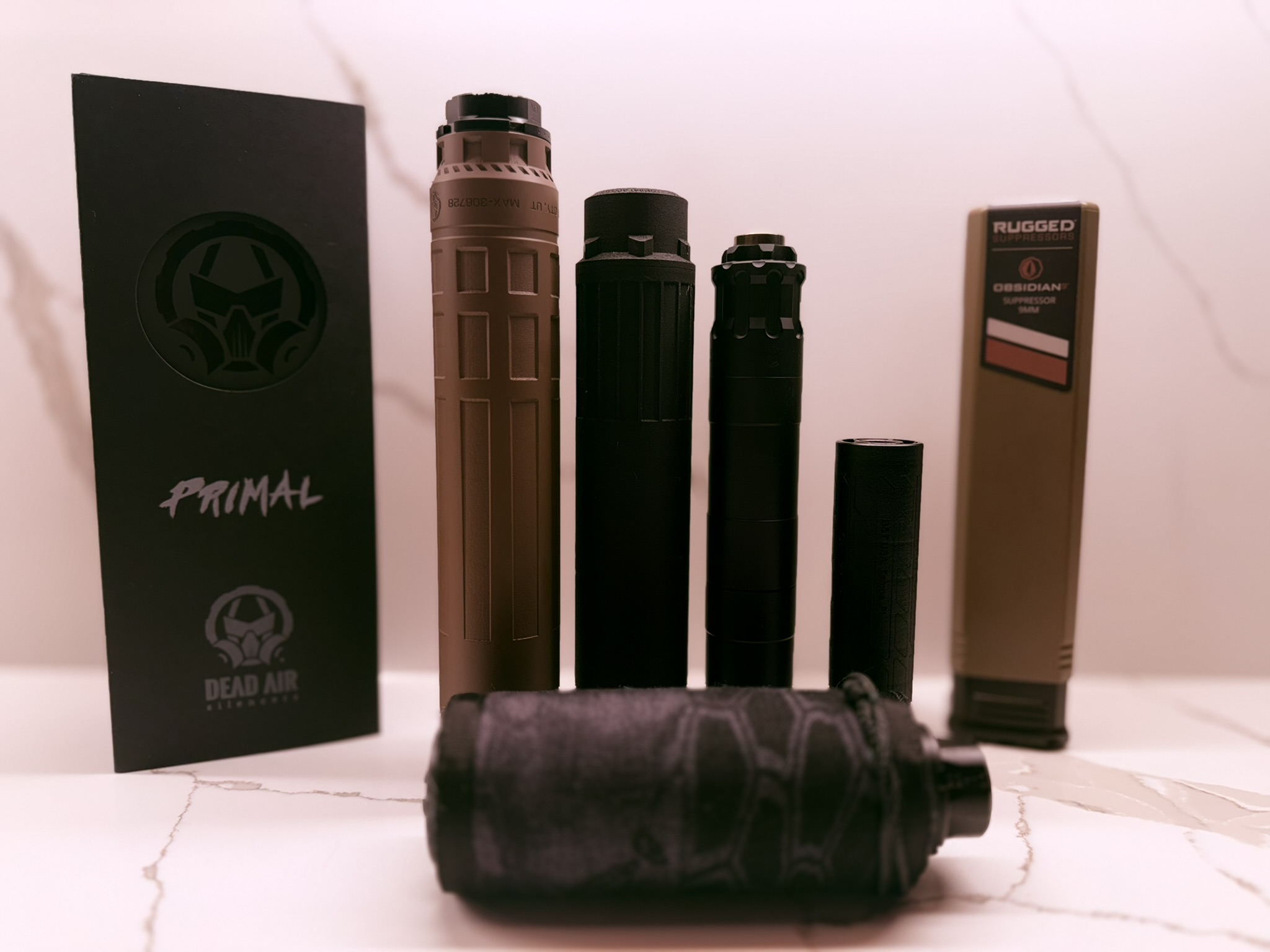
One of the easiest mistakes to make when buying a first suppressor is trying to buy the last suppressor you'll ever need.
It usually starts like this:
"I want one suppressor that will work on everything."
That's understandable. Suppressors aren't inexpensive, the buying process is different from purchasing an ordinary firearm accessory, and nobody wants to spend money twice.
The problem is that trying to make one suppressor perfect for every firearm can leave you with one that isn't really perfect for any of them.
So should your first suppressor be a dedicated can or a versatile multi-caliber suppressor?
The answer depends on what you're trying to accomplish.
What Is a Dedicated Suppressor?
A dedicated suppressor is selected primarily for a particular firearm, cartridge or narrow group of cartridges.
That doesn't necessarily mean it can only be used on one caliber. It means you've chosen it because it performs especially well for the job that matters most.
Examples include:
- A lightweight suppressor specifically for a hunting rifle
- A 5.56-focused suppressor for an AR-platform rifle
- A rimfire suppressor for .22 LR
- A suppressor selected specifically around .300 Blackout
- A large-bore suppressor for cartridges that won't fit through a conventional .30-caliber can
Dedicated suppressors let you optimize more aggressively around the firearm's actual use.
What Is a Multi-Caliber Suppressor?
A multi-caliber suppressor gives you broader compatibility.
The classic example is a .30-caliber rifle suppressor used on several smaller-bore rifles, provided the suppressor manufacturer approves the cartridge and barrel combination.
For someone who owns a .308, 6.5 Creedmoor and another compatible rifle, one versatile suppressor may provide significantly more use from the first purchase.
If you're unsure what suppressor bore size you actually need, read our Suppressor Bore Size 101 guide before making the decision.
Where a Multi-Caliber Suppressor Wins
For many first-time buyers, versatility is a perfectly reasonable priority.
A quality multi-caliber suppressor may let you learn:
- Which firearms you actually enjoy shooting suppressed
- Whether you prefer direct-thread or QD mounting
- How much suppressor weight bothers you
- How much added length you're willing to tolerate
- How important gas and backpressure are on a semiautomatic rifle
- What level of sound performance satisfies you
Instead of guessing at all those preferences before you've ever owned a suppressor, one versatile first can gives you useful experience.
Where a Dedicated Suppressor Wins
The advantage of a dedicated suppressor becomes more obvious when you know exactly what you want.
Suppose you have a lightweight deer rifle that you carry for hours. You might prioritize:
- Low weight
- Minimal added length
- Strong sound performance
- Point-of-impact consistency
Extreme sustained-fire capability may be far down the list.
Now compare that rifle with an AR that's fired much more rapidly during training or range use. That firearm may put more emphasis on:
- Backpressure
- Flash
- Heat tolerance
- Durability
- Mounting system
Trying to make one suppressor perfect for both platforms inevitably creates compromises.
The Bore-Size Tradeoff
A larger bore provides compatibility with larger projectiles, but bore diameter is only one part of suppressor performance.
A larger-bore suppressor can still perform extremely well on a smaller cartridge. But if maximum performance on one particular cartridge matters more than versatility, a suppressor designed more specifically around that application may offer an advantage.
Mounting Becomes Part of the Decision
If one suppressor is going to move among several rifles, a consistent mounting ecosystem becomes extremely valuable.
If a suppressor will stay on one hunting rifle for months at a time, an elaborate QD system may be unnecessary.
This is why it's smart to think about your future suppressor collection before buying a pile of muzzle devices.
Don't Forget Rimfire
There is one category where a dedicated suppressor makes a particularly strong argument: rimfire.
Dedicated rimfire suppressors are generally designed around the unique fouling and maintenance requirements of .22 LR and similar cartridges.
They're typically small, light and designed to be serviced.
Ask Yourself These Five Questions
1. Which firearm will I suppress most often?
Not which one could use the suppressor. Which one actually will?
2. Is weight important?
A hunter carrying a rifle for hours may answer that differently than someone shooting an AR from a bench.
3. Will the suppressor move between rifles?
If yes, the mounting system deserves more attention.
4. What is the largest cartridge I genuinely intend to suppress?
Don't buy around a cartridge you'll probably never own.
5. Do I expect to buy another suppressor later?
If the answer is probably yes, stop forcing the first can to solve every possible problem.
The Best First Suppressor Is the One You'll Actually Use
There is nothing wrong with choosing versatility. There is also nothing wrong with buying a dedicated suppressor first because you know exactly what you want.
The mistake is assuming one approach is universally right.
If this is your first NFA purchase, our How to Buy a Suppressor guide explains the process.
You can also shop our current suppressor inventory online.
At Lawson & Cooper Arms, we'd rather start with the firearms you already own, identify which one matters most, and work outward from there.
The goal isn't to sell you the most cans. It's to make sure the first one isn't the one you eventually regret buying.
Contact us with your rifle, caliber and intended use if you'd like help narrowing down the options.